
How to sell on Facebook Marketplace: A complete beginner’s guide

If you have clutter piling up at home and want to turn it into cash without paying listing fees, Facebook Marketplace is one of the easiest places to start. You don’t need a website, you don’t need followers, and you don’t need to be an expert.
You just need a solid listing, a fair price, and a simple process.
This guide walks you through everything step by step: setting up your profile, creating a listing that actually sells, pricing your stuff right, and staying safe while doing it.
What Facebook Marketplace is and why it’s worth using
Facebook Marketplace is a free buy and sell platform built into Facebook and the Messenger app. Anyone with an account can list items for sale and browse what is available nearby.
Here is why so many casual sellers prefer it over other platforms:
No listing fees: Unlike eBay, you pay nothing to post an item.
Local first: Most transactions are cash in hand, in person. There is no waiting on shipping.
Massive built in audience: Facebook has billions of active users. Your listing reaches people immediately.
Simple to use: You can have your first item posted in under five minutes.
It is not perfect. Flaky buyers, lowballers, and the occasional scammer are real. But for most people selling everyday household items, clothing, furniture, or electronics, it is hard to beat.
If you are thinking about turning casual selling into a real side hustle, check out our deeper guide: How to start a resale business on Facebook Marketplace.
Setting up your seller profile correctly
Before you list anything, take five minutes to make sure your profile looks trustworthy. Buyers check this before deciding if you are legit. A clean profile means faster sales and fewer ghosted messages.
What to do:
Use a real photo: You don’t need a professional headshot, but a clear photo of your face goes a long way. Profiles with no picture feel sketchy to most buyers.
Add a short bio: A couple of sentences about who you are and what you typically sell builds credibility fast.
Monitor your ratings: Once you make a few sales, buyers can leave you ratings. Respond to messages quickly and follow through on deals to keep your score high.
Join local groups: Many cities have active Facebook groups dedicated to local selling. Joining a few gets your listings extra exposure at no cost.
How to create a listing that actually sells
Your listing is everything. Most beginners lose money or get ignored because of weak photos, vague titles, or bad pricing. A good listing has four things working together.
Photos: Your biggest advantage
Photos are the first thing buyers see, and they are where most listings fall apart. Good photos can double your chances of selling.
Use natural lighting: Find a window or step outside. Avoid dark rooms and harsh overhead lighting.
Shoot multiple angles: Show the front, back, sides, and any areas of wear. Buyers who feel confident about condition are more likely to reach out.
Keep the background clean: A blank wall, a clean floor, or a white sheet works well. Clutter is distracting. Use the background removal feature in Hero Stuff to create professional pictures.
Don’t filter: Buyers want to see what they are actually getting. Heavily edited photos lead to disappointed buyers and bad reviews.
If you want a full walkthrough on shooting great pictures: The ultimate guide to product photography: How to shoot photos that sell.
Title: Make it searchable
Your title is your most important copy. It should exactly match what buyers are typing into the search bar. Include the brand, model, size, and condition where relevant. The more specific your title, the more likely your listing shows up.
Bad: “Sneakers”
Good: “Nike Air Max 90 men’s size 11, white and grey, barely worn”
Description: Answer every question upfront
Write like you are texting a friend who asked about the item. A strong, honest description saves you time and builds trust.
Make sure to include:
Brand and model
Dimensions, especially for furniture
Condition and any visible wear or flaws
What is included, like the box, accessories, or charger
Whether you are open to shipping or local pickup only
Need a faster way to write these? Check out How to write a perfect used product listing in seconds.
Using AI pricing to get it right from the start
Pricing is where a lot of sellers go wrong. Price too high and your listing sits. Price too low and you leave money on the table, or worse, attract buyers who assume something is wrong with the item.
The old way to price something was to browse similar sold listings yourself, try to account for condition, and make a gut call. That works, but it takes time and is easy to get wrong.
Instead of guessing, you can use a smarter approach with AI pricing. Tools like Hero Stuff analyze what similar items have actually sold for on platforms like eBay and Facebook Marketplace. It suggests a realistic price range based on real market data.
This is especially useful for:
Electronics: Resale value drops quickly and condition has a big impact on price.
Branded clothing and shoes: The difference between a good price and a great price is often just knowing the going rate.
Collectibles: Figuring out “what’s it worth?” is genuinely hard to answer without research.
For a deep dive into finding the perfect price: The ultimate guide to pricing used items online.
How to communicate safely with buyers
Messaging is where deals are won or lost. Most buyers are normal people looking for a good deal, but a small percentage are time wasters or scammers.
Red flags to watch for
“I’ll send a mover or driver to pick it up.” This is almost always a scam. Legitimate buyers don’t send strangers to do their shopping.
Overpayment requests. If someone offers to send you more than the asking price and asks you to refund the difference, stop the conversation. This is a classic check fraud scheme.
Pressure to move off platform. If a buyer immediately asks you to text them instead of messaging through Facebook, be careful. Staying in Messenger keeps a record of everything.
Tips for safe transactions
Meet in public: A parking lot, coffee shop, or a police station safe exchange zone is ideal for valuable items.
Accept cash: Venmo and Cash App are fine for people you know, but with strangers, cash is simpler and safer.
Trust your gut: If something feels off about a buyer, it is okay to cancel.
Shipping vs local pickup: when to offer which
You have two main options, and knowing when to use each can open up more buyers and faster sales.
Local pickup
Best for:
Bulky or heavy items like furniture and appliances
Fragile items that are risky to ship
When you want cash in hand and a fast transaction
Shipping
Best for:
Smaller items with broad appeal like clothing, shoes, and small electronics
When your local market is slow and you want to reach a national audience
Items with a niche audience that is unlikely to be in your local area
A simple rule: Start with local. Add shipping once you are comfortable.
How Hero Stuff helps you list faster
Once you have the basics down, the next question is how to do it faster. Writing listings one by one, researching prices manually, and editing photos takes time. This is where Hero Stuff fits in. Instead of doing everything manually, the tool helps you speed up the process:
AI powered listing creation: Point your camera at an item, and it generates a title and description ready to copy.
Instant AI pricing: Pulls real sold price data and tells you exactly what the item is worth today.
Background removal: Get clean, white background photos in one tap.
Cross listing: Create one listing and push it to both eBay and Facebook Marketplace at once.
Download Hero Stuff for iOS or Android to price, list and sell used items faster.
Pro tips to sell faster
Once you dial in the basics, these small tweaks make a big difference:
Final thoughts
Selling on Facebook Marketplace is simple, but doing it well is what separates quick sales from wasted time. Get your profile looking trustworthy, write an honest listing, price it based on real data, and meet your buyer somewhere public.
Once you dial those in, everything gets easier. And when you are ready to move faster, tools like Hero Stuff handle the parts that slow most sellers down.
Happy selling 🦸
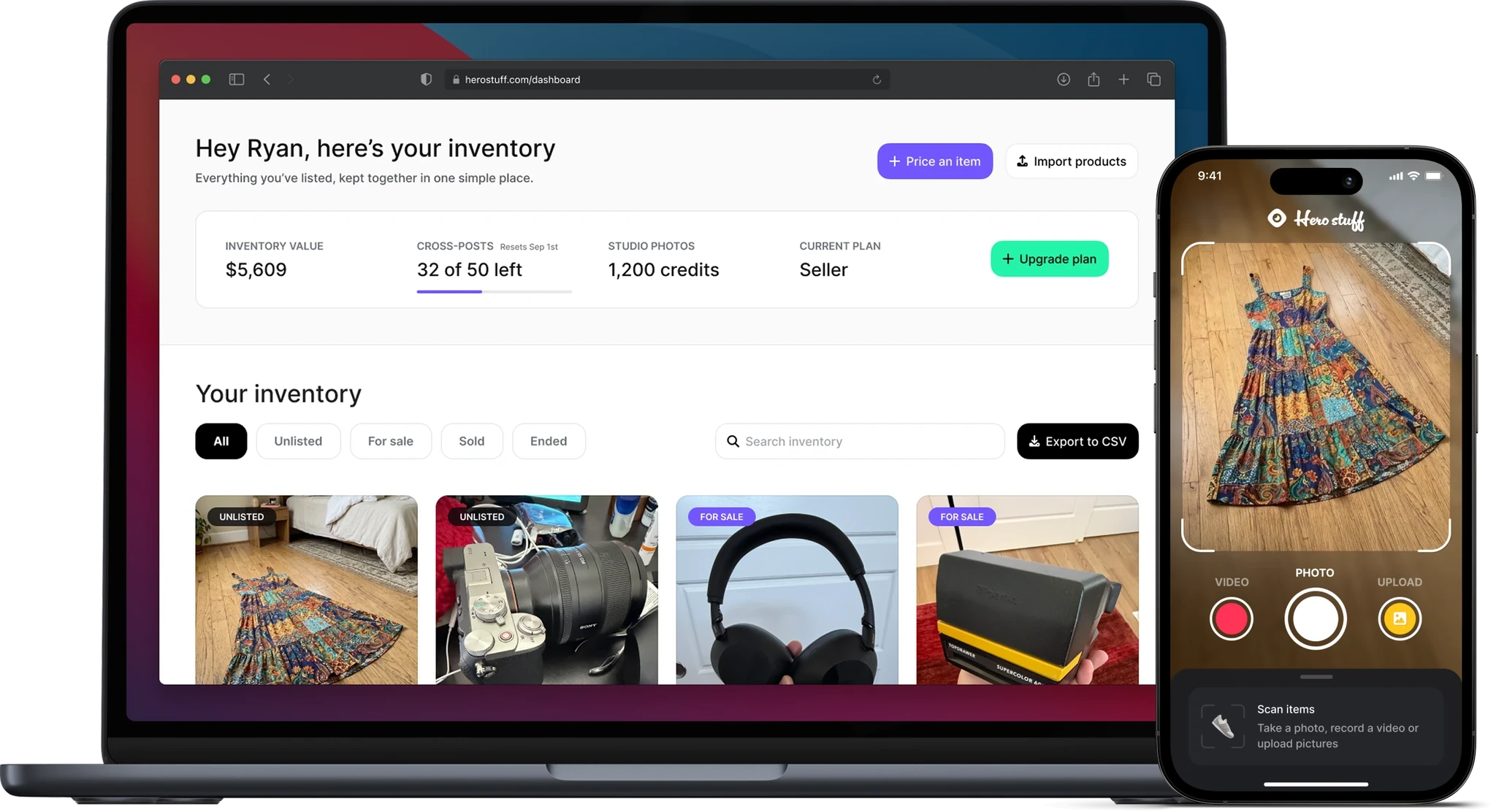
How to Import Shopify or WooCommerce Products to eBay and Facebook Marketplace
How to Import Shopify Products to eBay with Hero
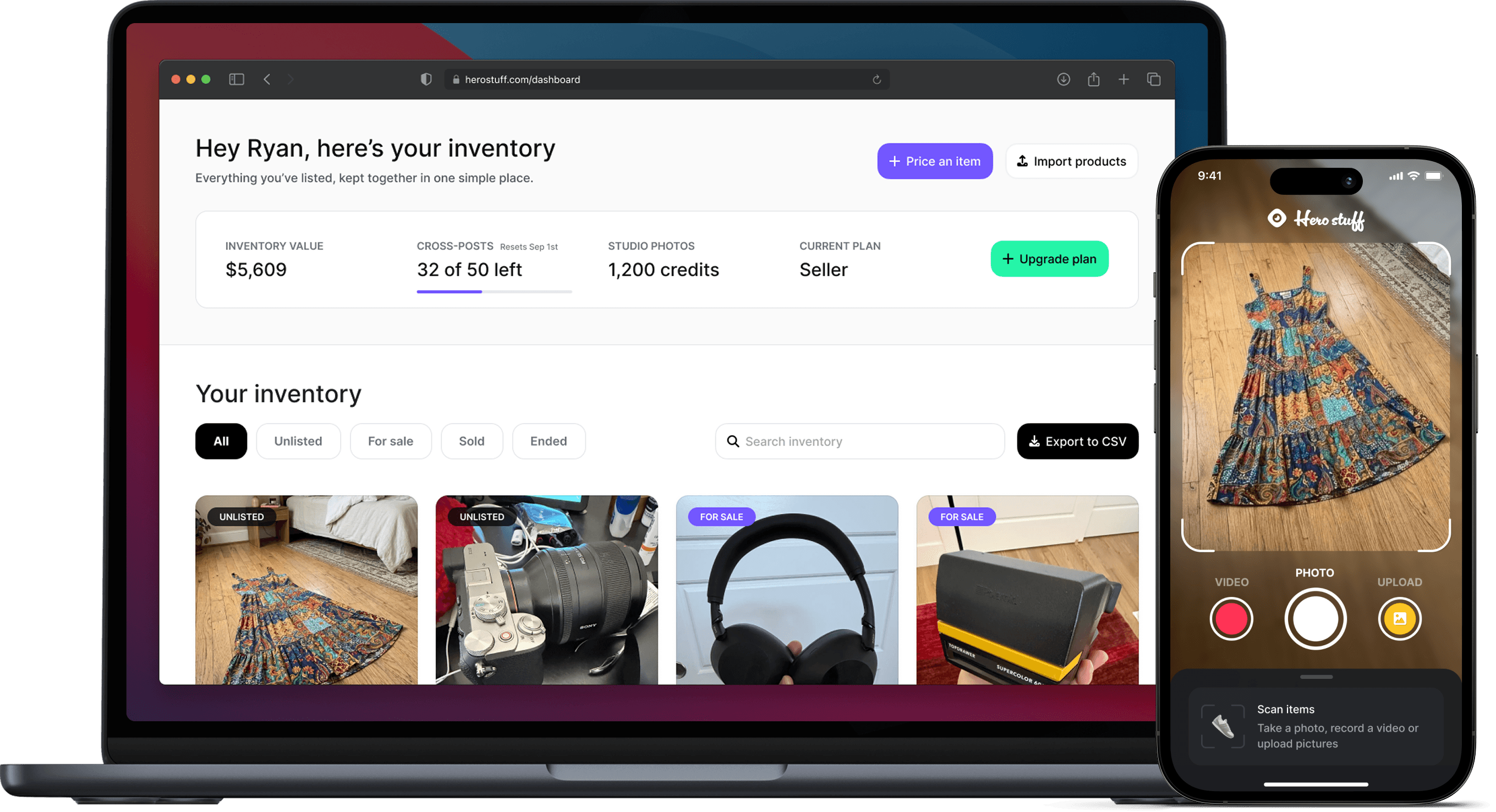
Hero now does bulk: connect Shopify, import your catalog, list everything

Hero is now available globally 🇩🇪 🇪🇬 🇮🇳
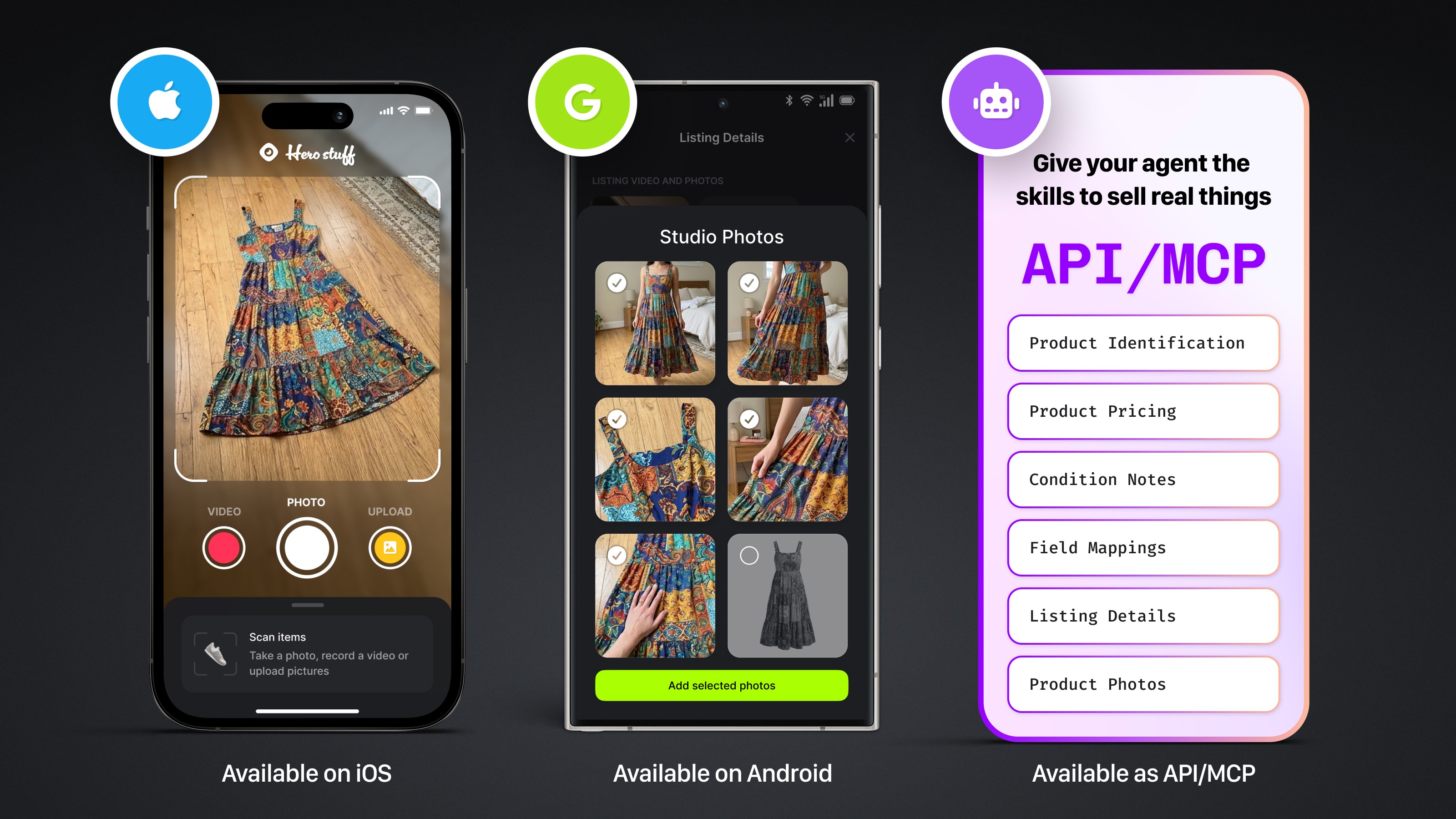
Four new ways to sell with Hero
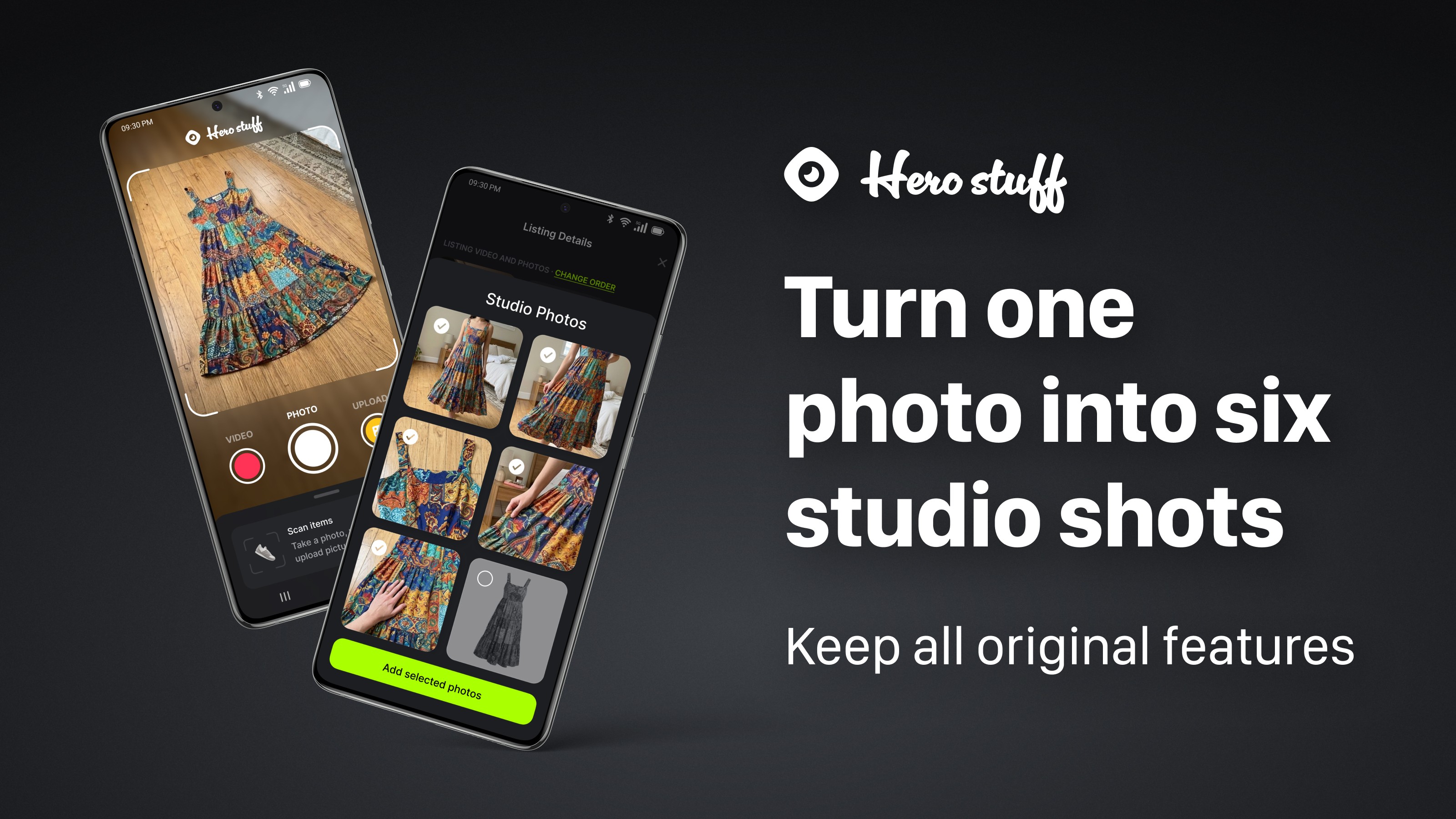
Introducing Studio Photos: Turn one photo into six studio shots

How to factory reset an iPad before selling it (step-by-step)